PBSci Dean's Office
University of California Santa Cruz
1156 High Street, Santa Cruz, CA 95064, USA
Phone: +1 831 459 2931
Email: gaensler@ucsc.edu
WWW: https://bryangaensler.net
(last seen in Santa Cruz CA, United States)
I am Dean of the Division of Physical and Biological Sciences (PBSci) at the University of California Santa Cruz (UCSC), and am a professor in UCSC's Department of Astronomy and Astrophysics.
As Dean of PBSci, I aim to foster world-leading reseach and impact, to provide degree-defining experiences for PBSci's students, and to center equity and inclusion at PBSci's core.
My research interests focus on cosmic magnetism, time-domain astrophysics and interstellar gas. My main goal is to understand why the Universe is magnetic: in particular, I am using the unique capabilities of the Australian Square Kilometre Array Pathfinder (ASKAP) to conduct the Polarisation Sky Survey of the Universe's Magnetism (POSSUM). POSSUM is based around an effect called "Faraday rotation", in which light from a background object is subtly changed when it passes through a cloud of magnetized gas. By measuring the Faraday rotation in the emission from a million distant galaxies over 50% of the sky, POSSUM aims to transform our understanding of magnetic fields in galaxies, clusters and in diffuse intergalactic gas, and to thus address key unanswered questions on Milky Way ecology, galaxy evolution and cosmology. The data from POSSUM will provide a substantial legacy to the astronomical community, while the new instrumentation required for this project is prototyping the technology needed for the Square Kilometre Array.
I also study the ways in which celestial objects change, flicker, flare and explode. I am involved in several systemic studies of the time-domain Universe, tailored to the unique capabilities of wide-field telescopes and all-sky surveys. I'm particularly excited by fast radio bursts (FRBs), random and intense flashes of distant radio emission whose nature and origin are one of the biggest mysteries in astronomy. I am fortunate to be part of the CHIME/FRB team, which has discovered more FRBs than every other experiment combined!
If you are a UCSC student interested in joining my research team, please feel free to email me.
I was born and raised in Sydney, Australia. I did my undergraduate and graduate degrees at The University of Sydney and at CSIRO's Australia Telescope National Facility. I subsequently held postdoctoral fellowships at the Massachusetts Institute of Technology and at the Smithsonian Astrophysical Observatory, was an associate professor of astronomy at Harvard University, an ARC Federation Fellow and Australian Laureate Fellow at The University of Sydney, and then was the Canada Research Chair in Radio Astronomy at the University of Toronto. From 2011 to 2014, I was the founding director of the ARC Centre of Excellence for All-sky Astrophysics, and from 2015 to 2023 was the director of the Dunlap Institute for Astronomy and Astrophysics.
Now follow the links...
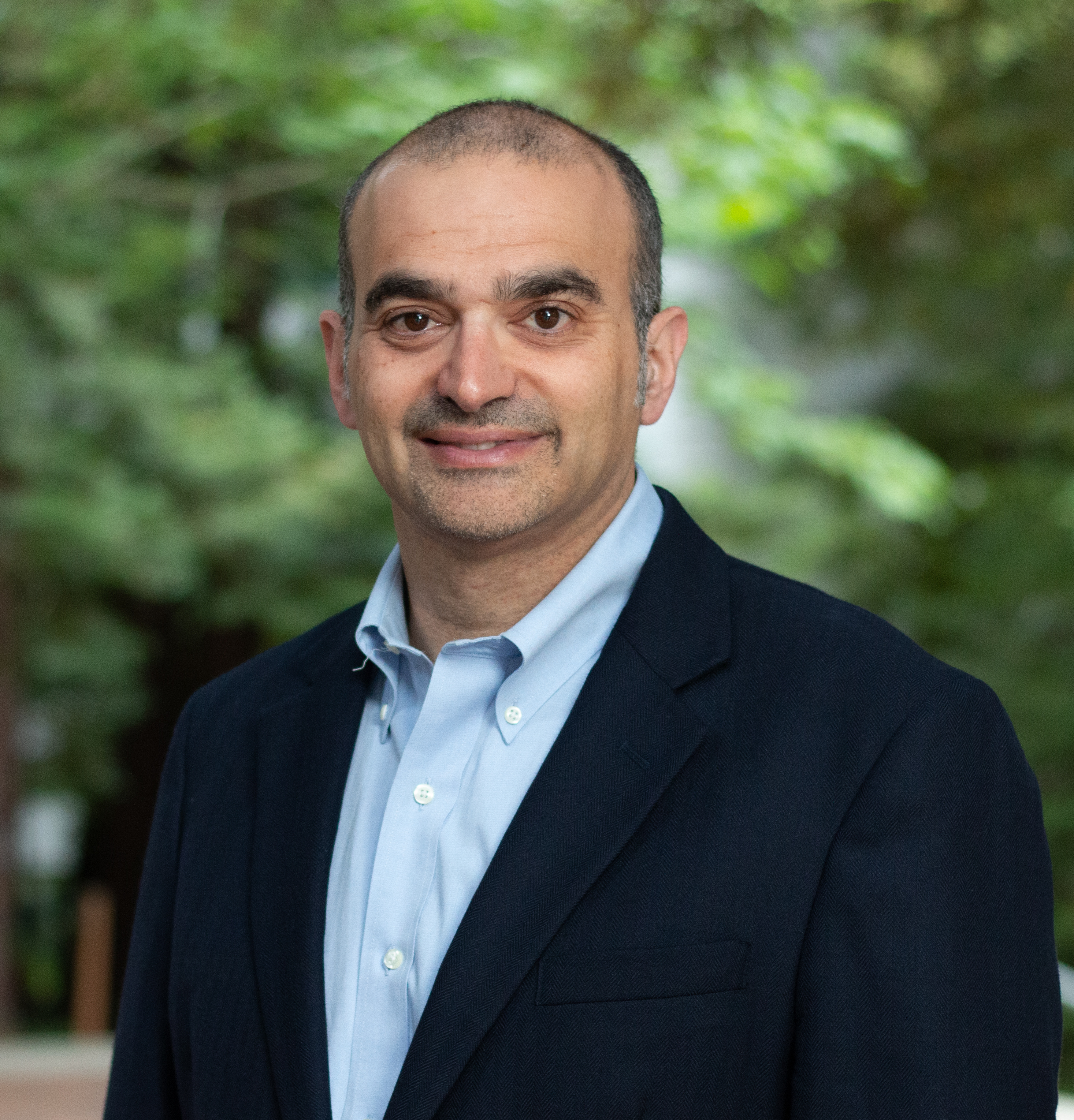
Photo: Renee Wall 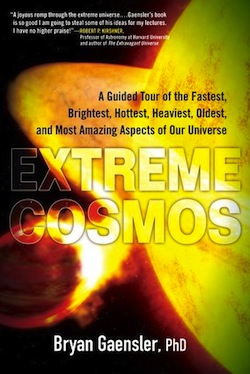
|
Latest News
 "The Cosmos" (weeklong discussion panel on TVO's The Agenda)
- "Fast radio bursts shine new light on Milky Way halo" (UofT news story)
- UCSC names astronomer Bryan Gaensler dean of Physical and Biological Sciences (UCSC news story)
Results and News Reports on My Work
- "'Once-in-a-lifetime opportunity': Trottier Family Foundation partners with U of T for solar eclipse viewing and education" (UofT news story)
- "Canadian researchers will have access to next-generation radio astronomy observatory" (UofT news story)
- "Attracting top talent: How one U of T Engineering search committee redesigned its hiring process" (UofT news story)
- "Among the Stars" (podcast episode of "Diner Discussions")
- "Mysterious space object stumps astronomers" (interview on CTV national news)
- "A Hunter of Dying Stars" (podcast episode of Coffee Pods with Holly Ransom)
- "Groundbreakers: U of T's Data Sciences Institute to help researchers find answers to their biggest questions" (UofT news story)
- "They topped the HSC in their day. Where are they now?" (news article in The Sydney Morning Herald)
- "Ask The Expert: Astronomy with Bryan Gaensler" (discussion and Q&A for WGBH)
- "How To Best Be An Ally In STEM" (report on a panel discussion)
- "UofT astronomer Bryan Gaensler wins mid-career achievement award" (UofT news release)
- "Astronomers Discover Sonic Boom From Powerful Unseen Explosion" (UofT news release)
- "Where to go stargazing in Toronto" (interview with CBC Metro Morning)
- "Astronomers Observe the Magnetic Field of the Remains of Supernova 1987A" (UofT news release)
- "What does it take to make an institution more diverse?" (interview with Nature magazine)
- "$23 Million in New Funding for Dunlap Institute Astronomers" (UofT news release)
- "Record-breaking Galaxy Five Billion Light-Years Away Shows We Live in Magnetic Universe" (UofT press release)
- "Did the eclipse live up to a U of T astronomer's expectation?" (interview for CBC Metro Morning)
- "Toronto astronomer's first eclipse will be today" (interview for CBC Metro Morning)
- "Mapping the Magnetic Bridge between our Nearest Galactic Neighbours" (UofT news release)
- "The Search for the Radio Cosmic Web and Large-Scale Cosmic Magnetism Begins" (UofT news release)
- "Peter Pan galaxies that never grow old" (UofT news release)
- "Supermoon visible in Canada to be brightest in almost 69 years" (interview for CTV News Toronto)
- "Signal from sun-like star sparks alien speculation" (interview for CBC's The National)
- "Magnets, aliens and why your dog poops in circles" (interview for Planet artsci)
- "An Expat Life" (interview for Qantas' Spirit of Australia in-flight magazine)
- "Distant Radio Galaxies Reveal Hidden Structures Right Above Our Heads (Dunlap Institute media release)
- "Talking Interstellar Explosions, Gender Equity and Hockey with the Dunlap Institute's new director"
- "Cutting Edge" (interview on Weekend Sunrise)
- "44 million stars and counting: Astronomers shout 'Snap!' and remap the sky" (CAASTRO news story)
- "Bryan Gaensler wins Scopus Young Researcher Award" (U. Sydney news story)
- "The Universe on a Dinner Plate" (profile in The Sydney Morning Herald)
- "Bryan Gaensler elected as a Fellow of the Australian Academy of Science" (U. Sydney news story)
- "TV program helps children follow their dreams through to university" (U. Sydney news story)
- "Access to galaxy of expertise key to world-class reputation" (article on my team in The Australian newspaper)
- "Galactic geysers fuelled by star stuff" (CAASTRO press release)
- "Physics Buzz: Extreme Cosmos" (podcast on my book, "Extreme Cosmos")
- "New astrophysics facility in Sydney could hold the key to secrets of the universe" (NSW Trade and Investment press release)
- "Still Starstruck After All These Years" (profile on me and my university studies in The Australian)
- "What I Drink When" (interview for the Sydney Morning Herald on my research and my favourite beer)
- "Music of the Universe" (U. Sydney media release)
- "Remnant of an explosion with a powerful kick" (NASA press release)
- "Space Invaders" (story for Australia Unlimited magazine)
- Author profile in Cosmos magazine for Extreme Cosmos
- Communication and religion in science (interview with Philip Adams on ABC Radio National's Late Night Live; mp3 of interview)
- "Geeks, Freaks and Eggheads" (a discussion on the perception of scientists on ABC TV's Big Ideas)
- "Churning Galaxy is a Snake Pit" (U. Sydney media release)
- "New All-sky Astrophysics Research Centre To Tackle The Big Questions" (interview for The Conversation)
- "An Astronomer's Guide to The Extreme Cosmos" (U. Sydney media release)
- CAASTRO: A New Way of Looking at the Sky" (U. Sydney media release)
- "The Extreme Stargazer's Guide to the Cosmos" (review of my book Extreme Cosmos)
- Conversations with Richard Fidler (interview on ABC Radio; mp3 of interview)
- "Heavy, fast and furious: Stars of the Milky Way" (U. Sydney news story)
- "Bryan Gaensler in Top 100 most influential people" (U. Sydney news story)
- "School of Physics wins prestigious Pawsey Medal for tenth time" (U. Sydney news story)
- "Charting Astronomical Collaboration in China" (U. Sydney news story)
- "Star physicist awarded science prize"
- "Star Meeting: Australia-China Astronomy Roundtable" (U. Sydney news story)
- "ARC announces funding of $20.6 million for Centre of Excellence for All-sky Astrophysics" (anzSKA media release)
- "Sydney Researchers Awarded Top Australian Fellowships" (U. Sydney media release)
- "Sydney's Stars" (astronomy highlights from the The University of Sydney's 2009 Annual Report)
- "Mapping Magnetism to Reveal Cosmic History" (part of Stories of Australian Astronomy)
- "Science Goals Align for POSSUM" (from the May 2010 ASKAP Science Update)
- "POSSUM, FLASH and ASKAP" (highlights from the International Year of Astronomy)
- "Magnetism in the Universe" (a Brainsmatter podcast on my recent research)
- "New Neutron Star Discovered in the Frying Pan" (U. Sydney media release)
- Behind the Scenes of Contact: The Movie (a memorable moment during National Science Week 2009)
- Astronomical Writing (a panel discussion on the ABC Book Show; mp3 of discussion)
- "Galaxy reveals its dark heart" (CSIRO media release)
- "Music & the Cosmos" (a special event for the ABC Science Show; mp3 of music & talks)
- "Around The World in 80 Telescopes" (webcast from Molonglo Observatory)
- In Conversation with Robyn Williams (interview on Radio National; mp3 of interview)
- "Tall Poppies Receive Recognition" (The Glebe news article)
- "Detective astronomers unearth hidden celestial gem" (ESA media release)
- "Bok Prize for IoA Honours Student" (U. Sydney media release)
- "Your top idea, in 100 words or less" (Sydney Morning Herald news article)
- "Australia 2020 Summit: Sydney academics make list" (U. Sydney media release)
- The Morning Interview with Margaret Throsby (interview on Classic FM; mp3 of interview)
- "The Milky Way is twice the size we thought it was" (U. Sydney media release; mp3 of ABC Radio interview)
- "Pulsed heartbeat of a weird new type of star" (ESA media release)
- "Distant ball of dust not dusty enough" (UC Berkeley media release)
- "The case of the neutron star with a wayward wake" (NASA media release; Astronomy Picture of the Day)
- "Bryan Gaensler receives 2006 AAS Newton Lacy Pierce Prize" (CfA media release)
- "Neutron Stars Gone Wild" (Science magazine's #4 breakthough of 2005)
- Chandra Chronicles Spotlight
- "Hassled galaxy thriving on chaos" (CSIRO media release)
- "Dying star flares up, briefly outshining rest of Galaxy" (New York Times news article)
- "Biggest stars produce strongest magnets" (CfA media release)
- "Chasing, catching, an American dream" (Sydney Morning Herald news article)
- The Mouse that Soared" (NASA media release)
- "New Fellowship Scheme Reverses the Brain Drain" (Queensland Government media release)
- "A New Spiral Arm for Our Galaxy" (ATNF media release)
- "Cosmic Corpses in A Spin" (Sydney Morning Herald news article)
- "Northern Stars Return Home" (University of Sydney News article)
- "A Cocoon Found Inside the Black Widow's Web" (NASA media release)
- "Age Discrepancy Throws Pulsar Theories into Turmoil" (NRAO media release)
- "New Australia Telescope eyes look at exploded star" (CSIRO media release)
- "Brightest young expats horrified at vilification of refugees" (SMH news story)
- "Chandra examines a quadrillion-volt pulsar" (NASA media release; Astronomy Picture of the Day)
- "Pulsars are lying about their ages" (NRAO media release)
- "Life of Bryan" (profile in The Australian)
- Astronomer named Young Australian of the Year (ABC news story)
- "Sting-ray in the Sky Sparks New Theory" (CSIRO media release)
- "Exploded Stars are Cosmic Compasses" (CSIRO media release)
Popular Articles I Have Written
- "Even in 2020, a double standard is still applied to women in the spotlight" (article for The Conversation)
- "Warp Drives and Aliens: The Scientific Perspective" (a public lecture at the Perimeter Institute)
- "Canada's grand plan to explore the mysteries of the cosmos" (article for The Conversation)
- "Mitigating Unconscious Bias in Assessment and Recruitment" (talk to UofT Faculty of Medicine)
- "The Future of Canada's Radio Astronomy" (opinion piece for Nature Astronomy)
- "How Star Trek: Discovery warps science" (opinion piece for The Conversation)
- "How to safely watch an eclipse: Advice from an astronomer" (opinion piece for The Conversation)
- "Eclipse of reason: Why do people disbelieve scientists?" (opinion piece for The Conversation)
- "Future visions of women, war, time and space" (opinion piece for The Conversation)
- "Humans in 2167: Internet implants and no sleep" (opinion piece for The Conversation)
- "Gender, Equity and Inclusion: A Cosmic Perspective" (talk for Ada Lovelace Day 2016 at York University)
- "How to capture the violent tumult of our roiling universe, moment by moment" (opinion piece for The Conversation)
- "Eyeing exomoons in the search for E.T." (opinion piece for The Conversation)
- "Gravitational Waves: Why Are Scientists Celebrating?" (op-ed for The Huffington Post)
- "Workaholism isn't a valid requirement for advancing in science" (opinion piece for The Conversation)
- "Why I love magnets and you should too" (opinion piece for The Conversation)
- "Maybe the hardest nut for a new scientist to crack: finding a job" (opinion piece for The Conversation)
- "Extremely large telescopes will add more firepower to search the cosmos" (article for The Conversation)
- "Getting educated in gender equity - one scientist shares his experience" (opinion piece for the Women in Science Australia blog)
- "A rare magnetic star is born - with a push in the right direction" (article for The Conversation)
- "Cosmic Magnetism" (address to the Australian Academy of Science)
- "The First Sounds in the Universe" (extract in Cheeseburgergothic from my book Extreme Cosmos)
- "Science needs more women" (op-ed for The Australian newspaper)
- "How Hot Is The Hottest Star?" (extract in Scientific American from my book Extreme Cosmos)
- "When the Universe Began" (extract in Salon from my book Extreme Cosmos)
- "For Science, Even Eureka Moments Are Bitter-Sweet" (op-ed on the Higgs Boston in the Sydney Morning Herald)
- "Cosmic Questions" (blog for The Huffington Post)
- "Gazing Deeply" (opinion piece on the SKA for the Australian Financial Review)
- "Splitting the Square Kilometre Array - Why a Dual-Site Setup is a Win for Everyone" (opinion piece for The Conversation)
- "Does the Cosmos Care?" (an op-ed for the 2012 Next Wave festival)
- Reviews of recent science fiction (on ABC Radio National's Books and Arts Daily; mp3 of discussion)
- "Extreme Speed" (extract in Cosmos magazine from my book Extreme Cosmos)
- "The Milky Way's Mad Scientists" (extract on ABC Science from my book Extreme Cosmos)
- "The Astronomer's Holy Grail" (article for The Conversation)
- "An Eye To The Future of Astronomy ... A Cosmic Pick `n' Mix" (article for The Conversation)
- "A New Way of Looking at the Stars" (my speech at TEDxSydney 2011; see also U. Sydney news item)
- "The Magnetic Universe" (popular article, published in Cosmos magazine)
- "Hip Hip Hooray for the (Aussie?) Square Kilometre Array" (article for The Conversation)
- "How To Make The Most of Your Overseas Experience" (Editorial for Academy of Science Early Career Newsletter)
- "The Magnetic Universe" (a popular article, published in Australasian Science)
- "Big Ideas and New Ways Forward" (Op-Ed for The Melbourne Review)
- "Reward Ideas, Not CVs" (Op-Ed in Australasian Science)
- "Dark Matter" (essay in response to Giles Ryder's exhibition Dark Matter)
- "Our Boomerangs Don't Come Back (Op-Ed in the Sydney Morning Herald)
- "Does Sydney Stack Up?" (article in the(sydney)magazine)
- "An Astronomer Gazes at Heavens" (essay in response to Asher Bilu's artwork Heavens)
- "Why Pluto Had To Go" (Op-Ed published in Cosmos magazine)
- "A Star Is Burst" (a popular article, published in Cosmos magazine)
- "Keeping the Faith in a World Less Certain" (Op-Ed in the Sydney Morning Herald)
- "Time for Scientists to Rock the Boat" (Op-Ed in Australasian Science)
- 2001 Australia Day Address
- "Reaching for the Stars" (autobiographical musings in the University of Sydney Gazette)
- "Of Dead Stars and Cosmic Lighthouses" (a popular article, published in Newton magazine)
- "Astronomy in Australia - Past and Future" (part of a symposium on Australia's Science Future)
- "When Big Stars Die" (a popular article, published in The Bulletin magazine)
- "Australian Science: Our Future" (an address to the National Press Club)
- "Exploding Stars and Smoke Rings" (a public lecture for the Museum of Victoria)
In science-speak...
- Publications
- Contact information
- One-page curriculum vitae (PDF format)
- My PhD thesis, in all its glory... (5.5 MB, pdf format) (on-line version available here)
- "Getting a Job in Academia" (advice from myself and Prof Sarah Maddison, from the 2012 ASA Early Career Research Mentoring workshop)
- Workshop on Neutron Stars in Supernova Remnants, 14-17 Aug 2001, Boston MA
- "The Origin and Evolution of Cosmic Magnetism", 29 Aug - 2 Sep 2005, Bologna, Italy
- MOST Supernova Remnant Catalogue
- Molonglo Calibrator Database
- New South Wales Expatriate Return Awards
When I'm not working...
- What I'm listening to
- Some books I've been reading:


accesses since 29-Feb-1996.